


eDNA sampling strategy & field kits
A well-designed eDNA sampling strategy is crucial to successful eDNA analysis. With the right approach, success rates of up to 95% are achievable. Sylphium Molecular Ecology provides sampling materials developed in line with the NPR 7394 guidelines, enabling rapid and highly reliable sample collection.
Choosing where to sample is essential to maximize the chance of capturing DNA from the target organism. Always consider the species’ ecology and preferred microhabitats. Detection probability increases when multiple samples are collected at different locations within the same water body. Keep in mind that DNA degrades quickly at ~20 °C, detectable eDNA can decline within ~48 hours. The full procedure and practical tips are provided in the protocol that accompanies the environmental sampling set.
eDNA sampling strategy
Sylphium’s eDNA analysis is optimized for very high analytical sensitivity (down to a single DNA molecule per analysis). In practice, the sampling strategy has the greatest impact on overall success. See the sampling manual for more detailed instructions.
- Minimum volume: filter atleast 0.75 L water per sample. Sufficient water volume is critical. If the capsule clogs sooner, continue sampling with a second capsule. Capsules from the same sample location can be pooled for analysis.
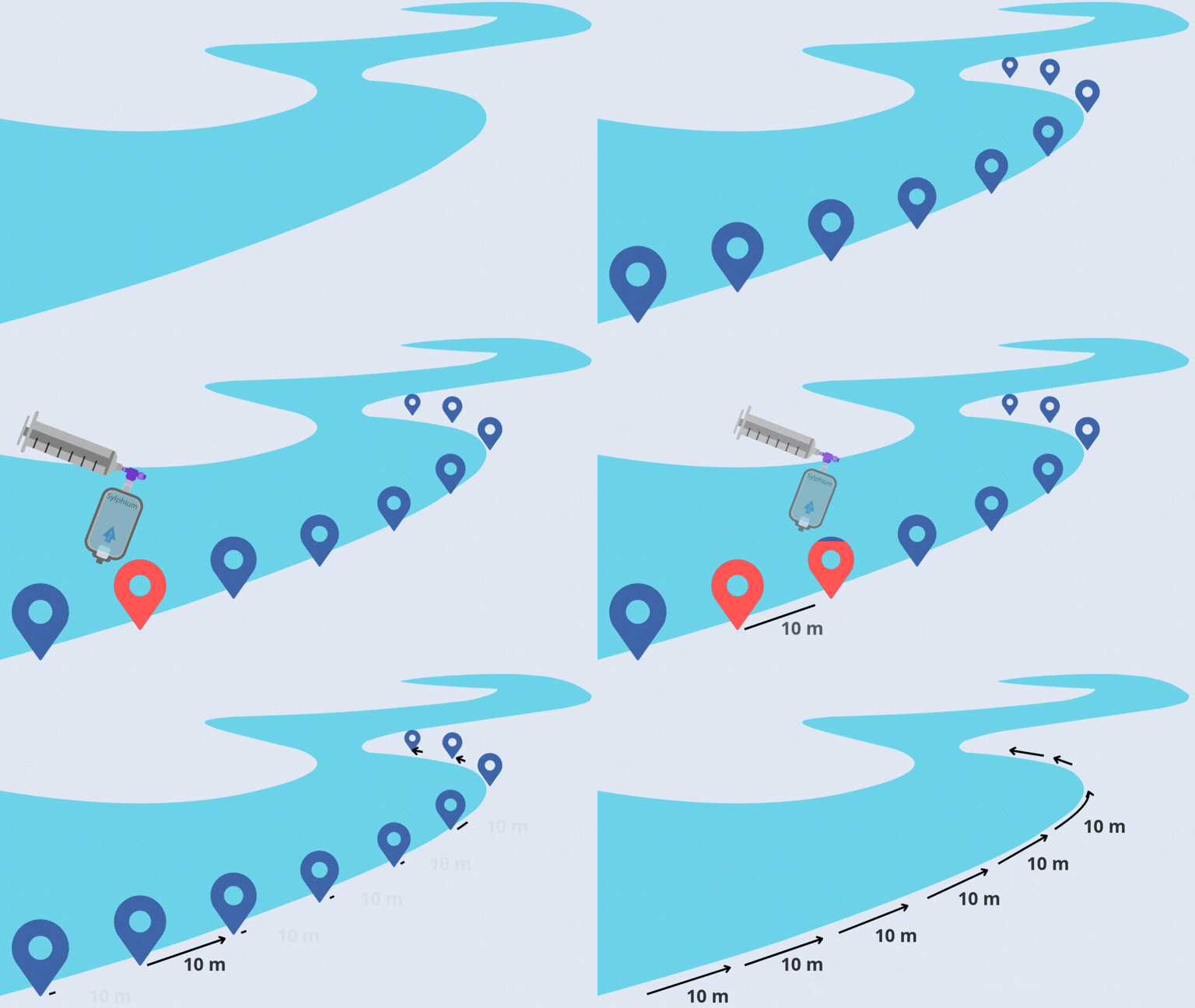
- Sampling distribution: collect one sample approximately every 300 m. Each sample should consist of multiple 60 mL sub-samples, preferably taken at intervals of ~10 m along the shoreline. Using the complete eDNA sampling set, each 60 mL sub-sample can be collected and filtered immediatly on site.
- Sampling location: target microhabitats where the species is most likely to occur, such as vegetation edges and water inlets or outlets.
- Seasonality: sample during the period when the target species is present and most detectable, as many species cannot be detected year-round.
eDNA sampling kit
The Sylphium molecular ecology sampling kit enables active collection and on-site filtration of water samples, minimizing contamination risk while keeping fieldwork lightweight. The kit includes an eDNA Dual Filter and a 60 mL syringe. Attach the filter unit to the syringe and press water through the unit – no vacuum pump is required. After adding preservation fluid and sealing the unit with the supplied caps, the sample remains stable for weeks to months without refrigeration. Each filter unit carries a unique sample number for secure identification and can be shipped unrefrigerated to our lab. eDNA sampling sets can be ordered here. The price of the sampling set is deducted from the analysis fee.
Sampling rod
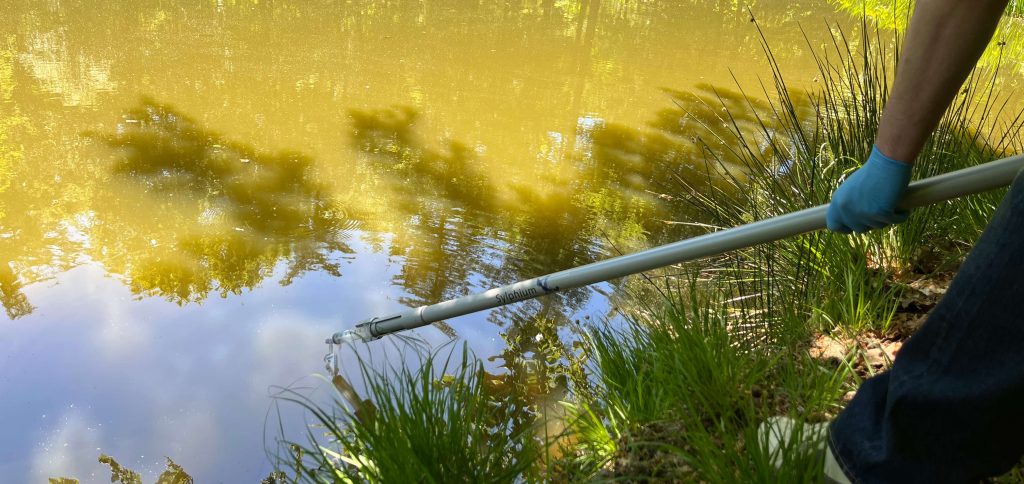
The custom sampling rod helps collect water in hard-to-reach areas (e.g., dense vegetation or steep banks). It securely holds a sterile 60 mL disposable syringe (from the sampling kit), reducing the need for waders, protective suits, boats, or other equipment, and significantly speeding up fieldwork. After use, simply replace the syringe and continue sampling. The rod can be purchased separately via the shop.
Sending samples
After sampling, place the eDNA Dual Filter back into the sampling set bag with its unique sample number and ship it unrefrigerated (registered) to:
Sylphium molecular ecology
PO Box 11107
9700 CC Groningen
The Netherlands