


Microcystin Cyanotox qPCR detection kit
| Product number | SYL102 |
| Category | qPCR kits |
| Specifications |
Information
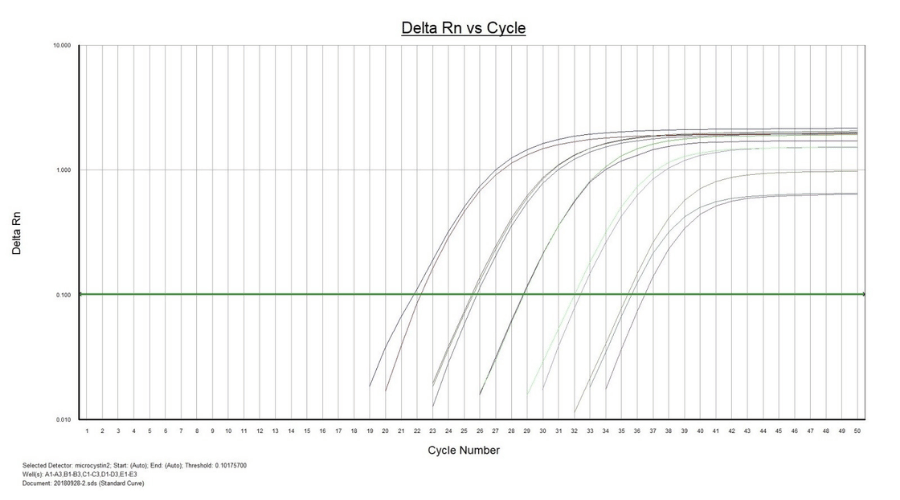
The SYL102 Microcystin Cyanotox qPCR Detection kit has been developed for accurate and consistent environmental DNA (eDNA) detection. Together with the Sylphium eDNA qPCR Mix, this kit delivers exceptional sensitivity, robustness, and accuracy in qPCR-based detection assays. The eDNA qPCR Mix is highly resistant to inhibitory substances, such as humic acids present in environmental samples.
This kit is designed to make a reliable risk assessment for Microcystin/Nodalarin in swimming waters. The Microcystin Cyanotox qPCR detection kit is based on the fast, sensitive, and proven primers/probe qPCR technique. Microcystin and nodalarin are similar toxins with similar genes and are regarded as equivalent. The Microcystin Cyanotox qPCR detection kit is designed to recognize both types of toxins at once. In this kit we use the name Microcystin for both toxins. The used qPCR primers and probe recognizes
the McyJ. McyJ is a gene from the biochemical pathway for the production of microcystins and is only singular present in this pathway. This makes it a good candidate to determine the copy number of microcystin biochemical pathways in water samples.
The toxic gene potential (TGP) was determined with this kit. The toxic gene potential is defined as the amount of toxin that can been produced by one copy of the microcystin biochemical pathway. This value can be used to make a reliable risk assessment for Microcystin.
Detection as a service:
We offer the detection of Microcystin Cyanotox as a service. Visit the analysis page or contact us directly for more information about sampling, shipping, and pricing.
Kit contents:
- Primer/probe mix (10x)
- eDNA qPCR Mix, containing:
- eTaq DNA polymerase
- eTaq qPCR mix
- PCR-grade water
- eTaq DNA polymerase
- Positive control
Common species names:
- English: Weil?s disease
- German: Weil-Krankheit
- French: Maladie de Weil
- Dutch: Ziekte van Weil
All kits are compatible with major qPCR platforms, including Bio-Rad, QuantStudio, and Applied Biosystems systems, and are suitable for FAM dye detection on most modern qPCR instruments. They are optimized for use on eDNA isolates purified using Sylphiums Environmental DNA isolation kit (#SYL002), but also work on isolates purified with other eDNA isolation methods/kits.
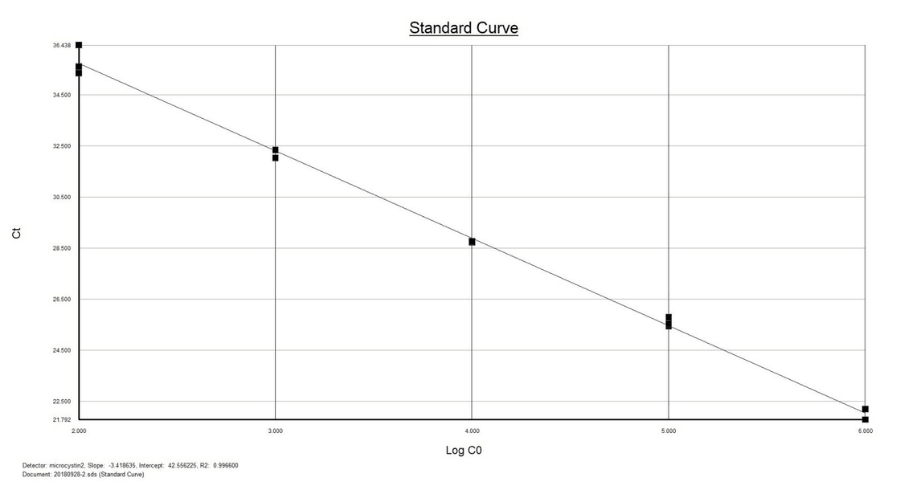
Our assays are validated for efficiency, inhibition resistance, and compliance with NPR 7394 quality standards. When combined with appropriate sampling methods, Sylphium eDNA detection kits provide a robust and dependable solution for species detection in environmental samples.
Why choose this kit?
- High resistance to inhibiting factors. Environmental DNA (eDNA) extracts often contain various qPCR inhibiting factors. Normal qPCR master mixes are sensitive to these substances.
- Strong fluorescence signal with low background noise. Isolated environmental samples contain residues of naturally occurring auto-fluorescent substances that will interfere with the measurements. Environmental samples need a strong fluorescence signal from the assay in order not to experience background interference.
- Highest possible sensitivity (1 DNA copy per reaction). Environmental water samples may contain very low amounts of target DNA.
- 100% specificity. Isolated DNA from environmental samples contains billions of DNA fragments from bacteria, protozoa, plants, animals, etc. Not only animals from the same order (fish, amphibians, reptiles, mammals, etc.) must be taken in account during primer/probe esign, but all known DNA sequences must be checked for nonspecific binding of the primers and probe.
All relevant literature, including user manuals and validation reports, are available for download via the button below: